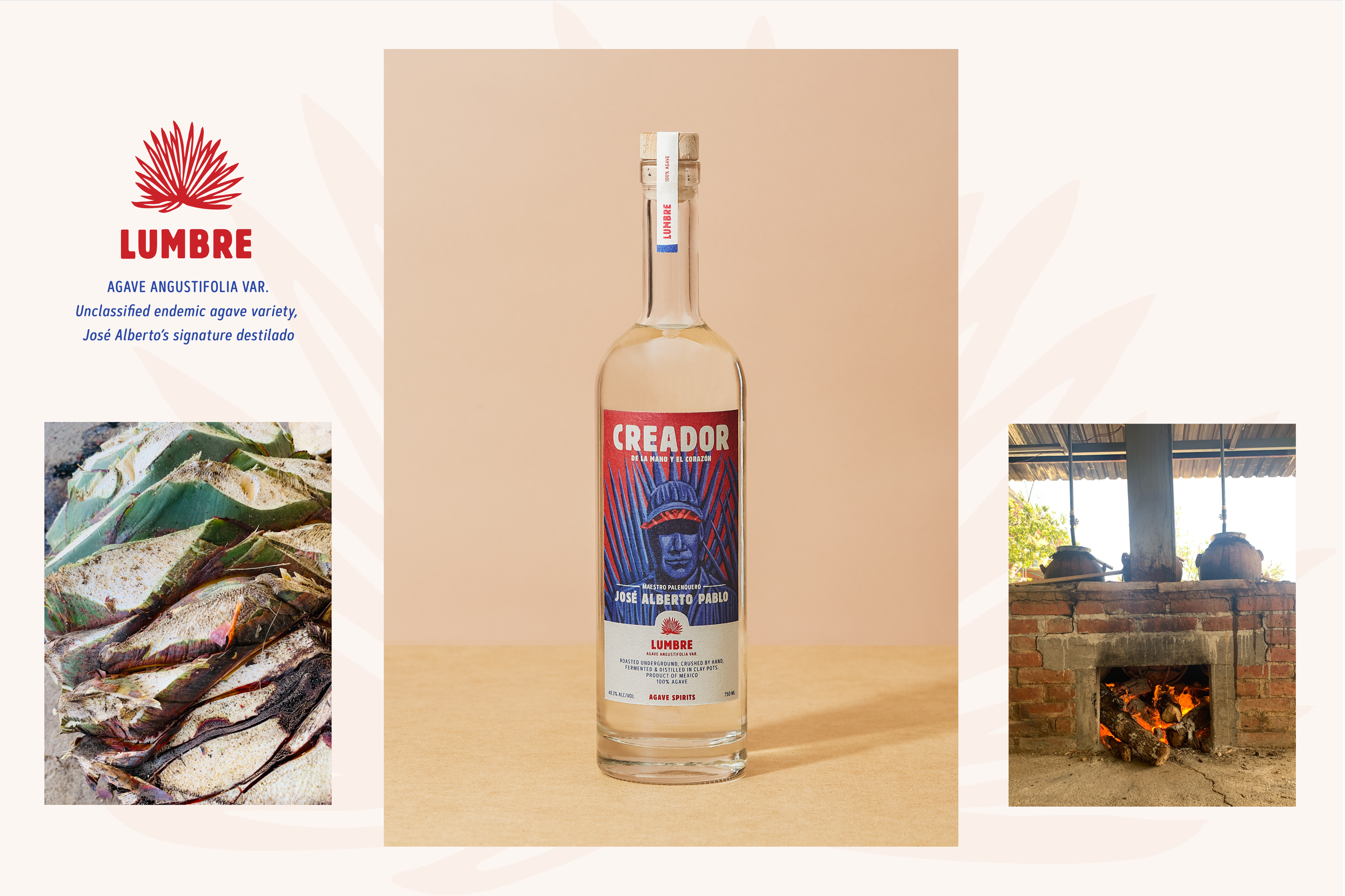
Lumbre: Fire, Place, and a Name That Means Different Things Depending on Where You're Sipping
When I start to describe José Alberto’s lumbre to someone, I start with the name.
Lumbre translates to fire in Spanish. The agave gets that name from a reddish coloration at the base of the pencas, the leaves, where they meet the heart of the agave, the piña. It's a subtle thing and when you're standing in a field of them it’s hard to see. But once José Alberto pointed it out to me, it's what I look for first.
That detail, the name coming from something visible in the plant itself, in contrast to a regulator or a brand, tells you something about how agave naming works in Oaxaca. Names emerge from communities, from observation, from long familiarity with plants that have been part of daily life for generations. Which is also why, as we'll get to, lumbre means different things depending on where you are.

Lumbre at José Alberto’s palenque
Before Espadín
To understand why lumbre matters to José Alberto Pablo and to San Bernardo Mixtepec, it’s relevant to touch on the arrival of espadín to Oaxaca.
Today, espadín, agave angustifolia, is the dominant agave in Oaxacan mezcal production, responsible for the vast majority of what's produced and sold commercially. It's approachable, it's relatively fast-maturing (in parts of Oaxaca as quick as 5 years), it yields a lot of mezcal, and it tolerates cultivation at scale. It’s usually what is in your cocktail and the mezcal world has largely run on espadín.
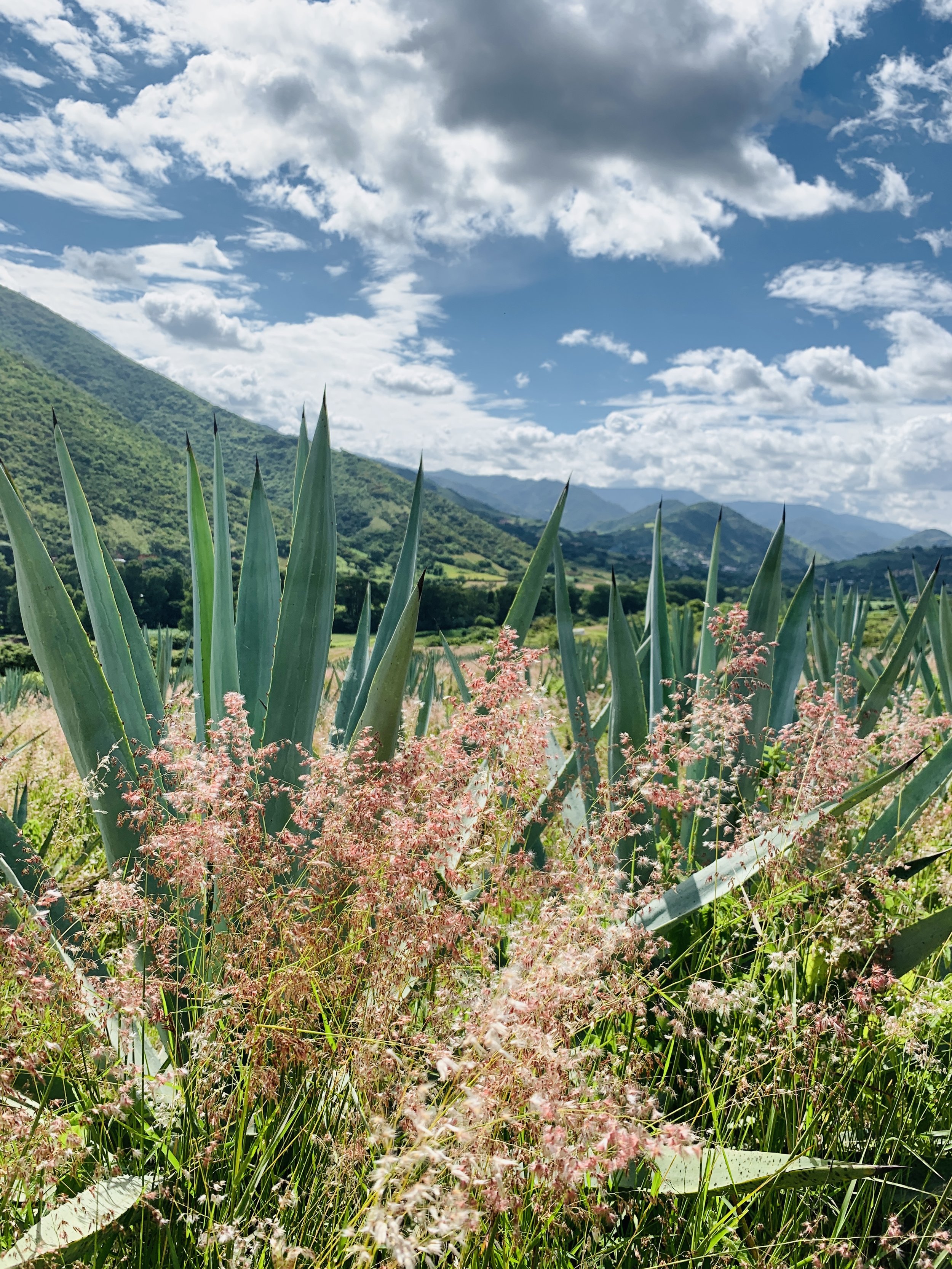
Espadín wasn’t always present in San Bernardo Mixtepec.
It was introduced to the community in the 1990s, when an agave shortage in Jalisco prompted agave angustifolia cultivation into Oaxaca to compensate for supply.
But espadín wasn't always present in San Bernardo Mixtepec. According to José Alberto, espadín was introduced to the community in the 1990s, when an agave shortage in Jalisco disrupted tequila production and prompted a significant movement of agave angustifolia cuttings and cultivation into Oaxaca to compensate for supply. Communities that previously worked with their own local agave varieties began growing espadín in larger numbers because the demand and economics supported it.
Before that, what José Alberto's father and grandfather worked with was what was already there. Lumbre. Mexicano. Tobalá. The agaves endemic to these hills at 1,600 meters in the Zimatlán district, and the plants that had been in this community before external markets arrived to inform what got planted and what got made.

Lumbre is in a sense the original agave of San Bernardo Mixtepec.
And it is the agave that José Alberto has consistently worked and that has become his signature expression.
Lumbre is in a sense the original agave of San Bernardo Mixtepec, the agave that was here before the introduction of other commercially convenient alternatives. And it is the agave that José Alberto has consistently worked and that has become his signature expression. Lumbre produces a destilado that is hyper-local, representative of José Alberto’s environment and his community, and in his view, and the view of people who taste his work, it is something genuinely special.
And we think, botanically, it is a variety of agave angustifolia, the same species as espadín (although it could also be a relative of agave americana, which grows in nearby Sola de Vega). For its designation on the Creador releases we went with agave angustifolia var., the “var” short for “varietal”. The two plants are likely close relatives, but they are not the same. The lumbre that grows in San Bernardo Mixtepec has adapted over generations to this specific elevation, soil, and microclimate. It presents differently in the field with slightly different leaf structure, the characteristic red coloration at the base, and it also presents differently in the glass.
Destilado made from lumbre in San Bernardo Mixtepec tastes different from a destilado made from espadín grown in the same community by the same producer (José Alberto has made both), and anyone who has tasted them side by side knows this immediately.
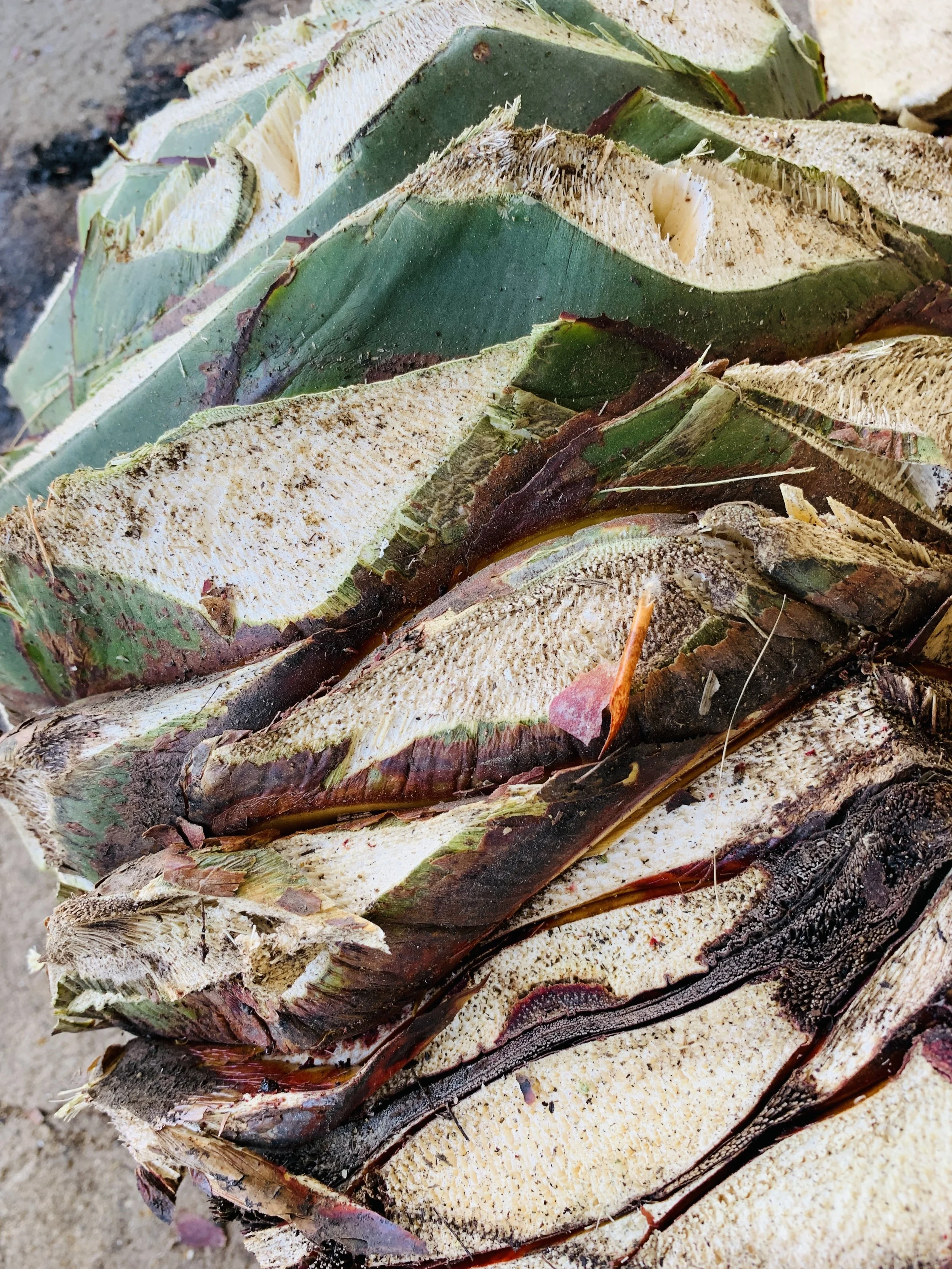
Lumbre piña
What’s In A Name?
Here’s where things get interesting, and maybe a little complicated, if not confusing.
Lumbre is not a botanical name. It is a colloquial name, a maguey name, the kind of local, community-specific designation that attaches to a plant based on its appearance, its location, its behavior, or some combination of all three. And like most colloquial agave names in Oaxaca, lumbre does not map cleanly to a single botanical species.
In San Bernardo Mixtepec, lumbre refers to the endemic agave angustifolia variety that José Alberto grows, the one with the red pencas. But in other communities in Oaxaca, the name lumbre has been applied to different agaves entirely.
In San Baltazar Guelavila, for example, the name lumbre is also used but refers to an agave that is botanically distinct from what grows in San Bernardo Mixtepec. It is likely named using the same visual logic as the agave in Guelavila also has a reddish hue to its pencas. Same name, same reason for the name, different plant.
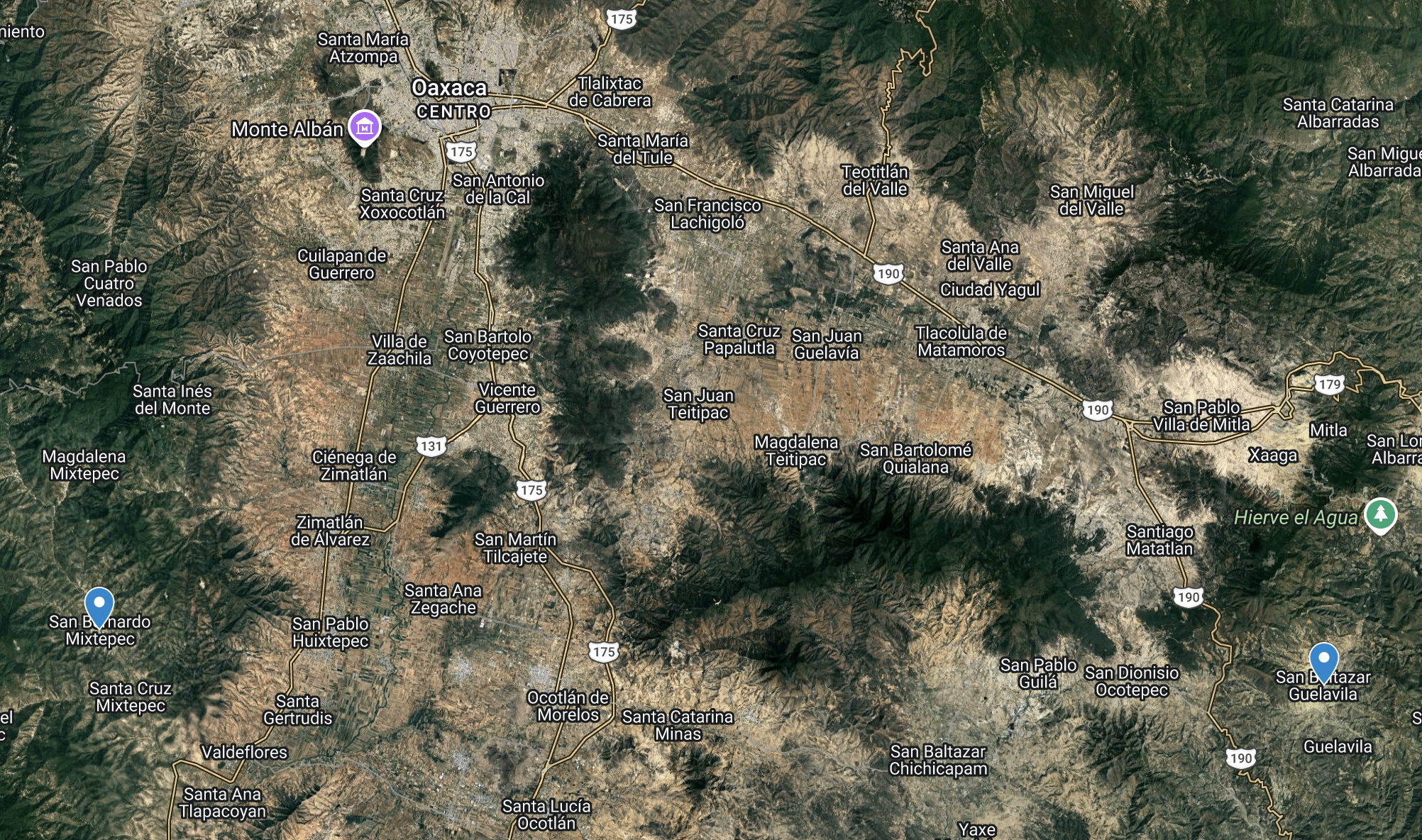
80 km separates the communities of San Bernardo Mixtepec and San Baltazar Guelavila
This is not unusual. It is, in fact, one of the defining features of how agave naming works across mezcal-producing communities in Oaxaca, and one of the things that makes the category a little difficult to navigate for anyone trying to understand what's in a bottle.
The same name can mean different agaves depending on the community. And the same agave can go by different names in different communities. Mexicano, agave rhodacantha, is a good example that's relevant to Creador's own lineup. In the Tlacolula area it refers to rhodacantha, while in Miahuatlán the name mexicano gets applied to what is botanically an agave americana. Cuish or cuishe is another. Throughout most of Oaxaca the name refers to a member of the karwinskii family. In Santa Catarina Minas and San Bernardo Mixtepec, cuishe refers to an agave rhodacantha.
Two communities using the same word for different plants. Two communities using different words for the same plant. You get me?
The certified mezcal regulatory framework has tried to address this by requiring that bottles list both the scientific species name (using the term agave) and the community common name (using the term maguey) — so a label might read Agave angustifolia var. / Maguey Lumbre. This is useful as far as it goes. But it doesn't fully capture the variation, because the community names themselves carry local meaning that doesn't always travel. And when that regulatory framework attempts to impose it’s naming logic on historically colloquial names, well, that doesn’t go down too well and ultimately is useful to no one.
Taxonomy in this world is a record of how communities have lived with these plants, named them from observation and use, and developed independent vocabularies that only partially overlap with one another. When José Alberto says lumbre, he means something specific: it’s a plant his family has made mezcal from for generations in San Bernardo Mixtepec. That specificity is part of what Creador tries to honor by including the community of origin in every release.
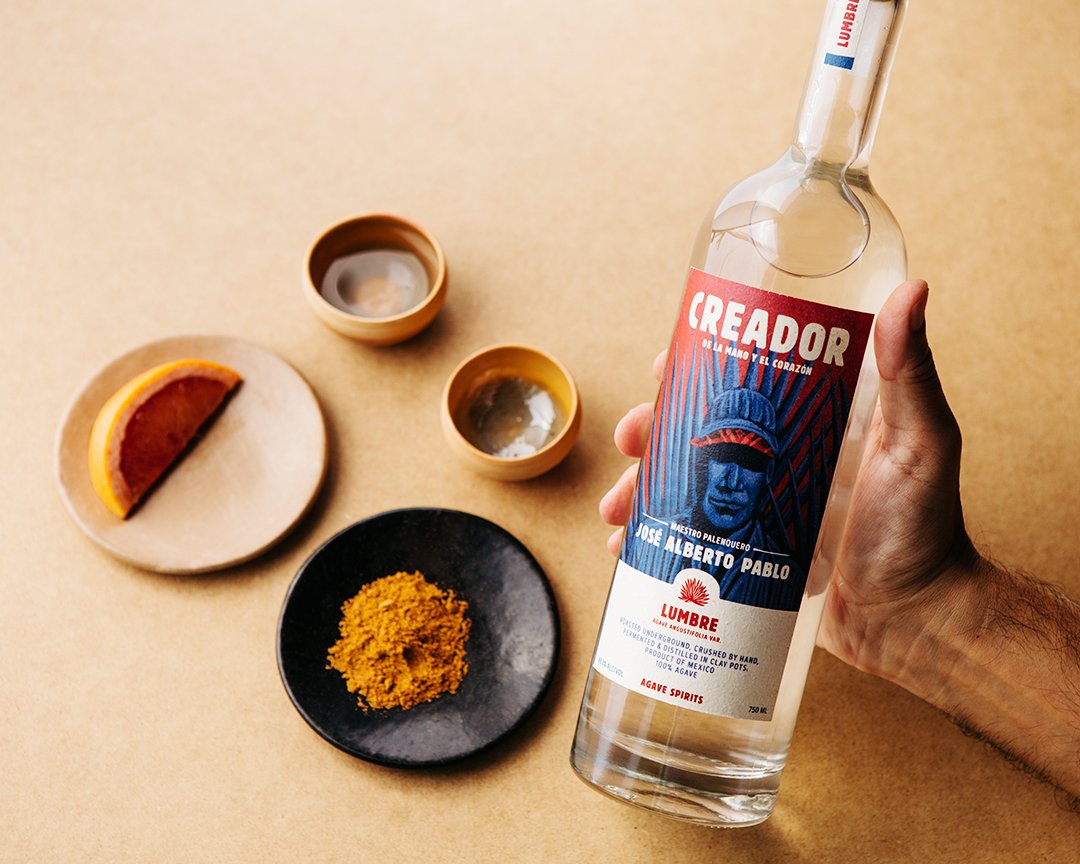
Why I Liken Lumbre To A Big Warm Hug
For all the complexity of its naming and its history, lumbre in the glass is very accessible. I describe it as a big warm hug from a friend - bold, immediate, warming, comforting, and always welcome.
You might expect an endemic variety, produced in small quantities by a single family in a specific mountain community, to be difficult, challenging, austere, or an acquired taste. But lumbre is exactly the opposite. On the nose, ripe apple and stone fruit. A palate that is soft and leathery sweet, with dried fruit, cherry, and a touch of tobacco. A finish that is long and pleasant. At 48.3 ABV it brings that warming heat, and a softness to it that I've come to think of as direct influence from the clay fermentation and distillation, and from the agave itself.
Every time I open a bottle of lumbre and pour it it’s like an invitation to the community of San Bernardo Mixtepec, and the world of José Alberto’s clay pot expressions. That is partly what makes lumbre the signature expression of this project, because it is the agave that was here before everything else, it’s representative of the community, and because in José Alberto's hands, it shows you exactly what this place, these hillsides, this tradition, is capable of.